
Functional safety of electrical/electronic/programmable electronic safety-related systems - Part 1: General requirements
IEC 61508 is an international standard that provides a framework for ensuring the functional safety of systems that depend on electrical, electronic, or programmable electronic (E/E/PE) technologies. IEC 61508 is a generic functional safety standard and is applicable across a wide range of industries where electrical, electronic, or programmable electronic systems perform safety-related functions that could cause harm to people, the environment, or assets.. It serves as the foundational safety framework for numerous industry-specific standards and is relevant to any sector where system failures could lead to hazardous situations.
Industries Applicable to IEC 61508:
- Industrial Equipment
- Safety instrumented systems (SIS)
- Programmable logic controllers (PLCs) with safety functions
- Machinery and Industrial Automation
- Robotics
- Manufacturing equipment safety controls
(Leads into IEC 62061 and ISO 13849-1)
- Automotive
- Medical Devices
- Electrical equipment for measurement, control, and laboratory use
- Life-supporting or life-sustaining systems
(Sometimes supports compliance with IEC 60601-1 and IEC 62304)
- Renewable Energy
- Power Generation
- Process Industry
- Chemical plants
- Oil and gas facilities
- Water treatment
(Often applied through IEC 61511, derived from IEC 61508)
- Railway and Transportation
- Train control and signaling systems
- Mass transit and automated transport
(Influences standards like EN 50126/50128/50129)
- Aerospace and Defense
- Flight control systems
- Missile and weapon control safety
Scope of IEC 61508
The scope of IEC 61508 encompasses the development and management of electrical, electronic, and programmable electronic (E/E/PE) systems that perform safety-related functions. It provides a generic, cross-sector framework that serves as the foundation for many industry-specific functional safety standards. The standard covers the entire safety lifecycle, from concept and risk assessment through design, implementation, operation, maintenance, and decommissioning. It ensures that systems function correctly and reliably to reduce risks to acceptable levels. IEC 61508 applies to both hardware and software, addressing random hardware failures, systematic design issues, and human error. A key feature is the use of Safety Integrity Levels (SILs), which classify the required reliability of safety functions based on the severity of potential hazards.
IEC 61508 Testing for Compliance
IEC 61508 testing is not a single pass/fail test, but a structured process embedded within the product’s development lifecycle. It combines analytical techniques, functional testing, fault simulation, and rigorous documentation to verify that the system meets defined safety integrity levels and operates reliably under both normal and failure conditions.
Typical Test Procedure for IEC 61508
- Safety Requirements Specification (SRS) Review - confirm that safety functions and target SIL are clearly defined while verifying traceability of all safety requirements throughout the development and test processes.
- Hardware and Software Design Validation - evaluate the product's architecture, redundancy, and fault tolerance features ensuring compliance with design rules and SIL-specific requirements for failure rates, diagnostics, and reliability.
- Failure Mode and Effects Analysis (FMEA/FMEDA) - perform detailed analysis to identify potential failure modes and their effects.
- Static Code Analysis and Software Review - analyze source code for compliance with safe coding standards and check for logic errors, dead code, and adherence to software development practices outlined in IEC 61508-3.
- Dynamic Testing (Unit, Integration, and System Testing) - test individual components (unit tests), integrated subsystems (integration tests), and the full system (system tests). Confirm correct execution of safety functions under normal and fault conditions.
- Fault Injection and Diagnostic Testing - introduce faults to validate the system’s response and assess diagnostic coverage and the system’s ability to enter a safe state when needed.
- Hardware Reliability Testing - perform environmental and stress testing (temperature, vibration, EMC, etc.) to simulate operational conditions.
- Proof Testing Procedures - define and verify procedures to regularly test safety functions during the product’s operational life and ensure these procedures effectively detect latent faults.
- Safety Function Performance Verification - measure the actual performance of safety functions (e.g., response time, signal integrity) and compare results to SRS requirements.
- Documentation and Certification Review - compile all test data, analysis results, and traceability matrices and submit documentation to a third-party certifying body, such as Intertek, for independent assessment and certification.
Intertek's Functional Safety Solutions
We support full lifecycle functional safety compliance with frameworks like IEC 61508, addressing risk assessment, safety integrity levels (SIL), failure analysis methods (such as FMEA and FTA), and overall systems interaction. Our functional safety services not only enhance safety and reliability but also reduce liability, warranty claims, and operational downtime—ultimately boosting product quality and competitive advantage. We offer services that extend across sectors including industrial machinery, hazardous environments, medical devices, transportation, utilities, and more.
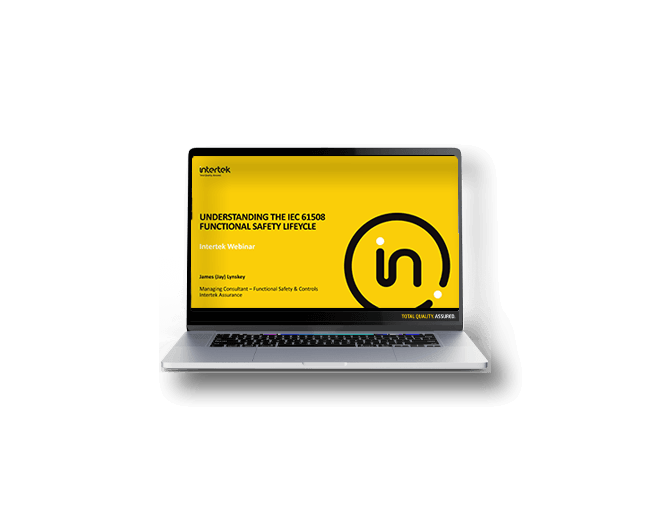
Learn how the IEC 61508 Functional Safety Lifecycle provides a structured framework for managing risk from concept through decommissioning.
Related Links
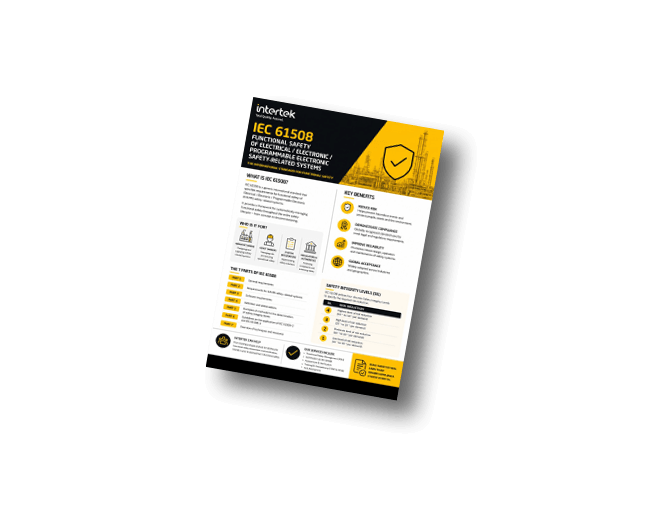
IEC 61508: The International Standard for Functional Safety Overview
Download our IEC 61508 Functional Safety Overview infographic for a concise visual guide to the standard's safety lifecycle, Safety Integrity Levels (SIL), and core requirements.


01 Apr 2026
IEC 61508: Understanding Demand Modes
How End-Product Applications and Standard Requirements Determine Functional Safety

22 Jan 2026
Exploring the IEC 61508 Proven-In-Use Concept
How Operational History Can Justify Safety Integrity Level Capability

Functional Safety Testing & Certification
From early design stages through to production, our modular FS solutions provide flexible options for manufacturers, and our FS Mark provides stakeholders with visibility for products they purchase, install, or utilize in operations.
Catch up on our most recent blogs about Functional Safety...



21 Sep 2026
Understanding the IEC 61508 Functional Safety Lifecycle – Part 5
Functional Safety Does Not End at Product Release
14 Sep 2026
Understanding the IEC 61508 Functional Safety Lifecycle – Part 4
Verification, Validation, and the Evidence Problem
09 Sep 2026
Understanding the IEC 61508 Functional Safety Lifecycle – Part 3
Safety Requirements and System Design
31 Aug 2026
Understanding the IEC 61508 Functional Safety Lifecycle – Part 2
The Starting Point: Hazard and Risk Assessment
24 Aug 2026
Understanding the IEC 61508 Functional Safety Lifecycle – Part 1
What is the Functional Safety Lifecycle?
19 Aug 2026
Use of “Software Only” Functional Safety Requirements
Examining the Gaps between Software Evaluation and True Functional Safety
20 Jul 2026
When Does Machinery Require Notified Body Approval?
The Relationship Between Harmonised Standards, Presumption of Conformity, Technical Documentation, and Conformity Assessment Routes

08 Jul 2026
Functional Safety: Getting Safety Requirements Right
The Foundation of IEC 61508 and IEC 61511 Compliance